
History
Our Beginnings in Gary, SD
The South Dakota School for the Blind was officially opened in Gary, South Dakota on March 1, 1900, under the Board of Charities and Corrections. The citizens of Gary were instrumental in pursuing the location of a state "Blind Asylum" in their community and offered the former Courthouse as a facility.
After inspection by the Board of Charities and Corrections it was determined additional accommodations would be needed. The city of Gary constructed a new two-story building according to the plans submitted by the Board of Charities and Corrections. Ground was broken for the facility in July 1899, and the facility was officially presented to the state of South Dakota on March 1, 1900, with a grand reception.
Additional construction on the Gary campus included areas for administration, girls' dormitory, boys' dormitory, auditorium, several barns, and a large chicken house. The school kept a large dairy herd, raised hogs, and chickens and planted a large garden. They produced milk, meat, eggs, and vegetables for their own use and for sale to the community. In 1945 the School for the Blind was placed under the jurisdiction of the South Dakota Board of Regents.

Relocation to Aberdeen, SD
In 1957-58 the idea of relocating the school surfaced. The major contentions were the inadequacy of the facilities at Gary, the lack of opportunity for city travel experiences and the proximity to a college.
In 1959, the State Legislature passed a bill authorizing relocation of the school to Aberdeen. At that same session, $800,000 was appropriated to build an entirely new set of buildings on the land donated by the citizens of Aberdeen for the purpose.
Ground was broken on April 11, 1960, and a one-story building was constructed, with separate areas for classrooms, dormitories and other services. Classes began in the new facility in Aberdeen on September 18, 1961. The historic old campus has been restored and can be visited.

Growth of our Programs
In 1968 an Activities Building was completed at a cost of $165,000. The unit houses a gymnasium auditorium which provides space for physical education, recreation, music, drama and other large and small group activities.
In 1970 the name South Dakota School for the Visually Handicapped was adopted. This change reflects the fact that students who are visually impaired as well as blind can receive services. This was not a new development; the majority of students since 1900 have had some degree of usable vision.
A federally funded program to serve deaf blind students was begun in 1972 as a part of the nationwide response to the rubella epidemic of the mid-sixties. Because of their reduced ability to learn through visual or auditory modes, different teaching methods were introduced. In 1979 serving the deaf blind was added to the responsibility of the South Dakota School for the Visually Handicapped and the program was funded by the state.

Growth in our Teachings
The South Dakota School for the Visually Handicapped has had a strong history of including students in the public schools and community activities, because an integrated approach to teaching the blind and providing "hands on" experiences are appropriate for the students.
The school has also introduced new technologies as they have become available, including large print, voice output for our computers, Reading Edge, talking encyclopedia and low vision aids.
Curriculum developments, new teaching methods, and integrated use of the therapy programs have been adopted to better serve the students. In 1984 a Work Experience Program was started to provide students an opportunity to develop practical skills through both on campus and off campus employment.

Growth throughout SD
After the introduction of Public Law 94-142 (Education for All Handicapped Children Act, EHA) in 1975, there were increasing requests from public schools for assistance with evaluating students who are visually impaired. The SDSVH also developed a Multifaceted Evaluation Program to assist schools in planning programs for students who are being educated in their home districts.
In 1981 the South Dakota School for the Visually Handicapped, in a response to growing requests from parents and local school districts, hired its first Consultant to travel and work with visually impaired students in their homes and public schools.
Currently, there are six Outreach Vision Consultants who provide this service and a Transition Specialist who assists older students statewide. In addition, consultation in the area of adaptive technology is also available to local schools.

Name Change
On the recommendation of the South Dakota School for the Visually Handicapped Advisory Council and with the support of the South Dakota Board of Regents, the South Dakota Association of the Blind, and the National Federation of the Blind of South Dakota, the school requested a name change during the 1998 legislative session.
On July 1, 1998, the South Dakota School for the Visually Handicapped became the South Dakota School for the Blind and Visually Impaired. During the 2000 Legislative Session funding was earmarked for six weeks of summer programs.

Relocation in Aberdeen, SD
The South Dakota Board of Regents approved the building of the new South Dakota School for the Blind and Visually Impaired on October of 2017. From the start of the project Northern State University and the South Dakota School for the Blind and Visually Impaired have joined together as partners to make the project fit both organizations' needs.
This collaboration has developed into teaching, learning, and student opportunities that dually benefit the two organizations. On January 13, 2020 the South Dakota School for the Blind and Visually Impaired started classes at its new home on the former grounds of Jerde Hall located on the east side of the Northern State Campus.
The SDSBVI building was financed in collaboration with Northern State University and the Northern State University Foundation. A land swap was completed in order for SDSBVI to move to its new location and provide a repurposing of the former school location to be the new site for Northern State University's football and softball complex.

Building Project
The approximate cost of the SDSBVI building and grounds was about $13.85 million. Funding was obtained through donations to the NSU Foundation capital campaign and both Governor Noem and Governor Daugaard each donated $2.5 million from their Future Fund.
The South Dakota School for the Blind and Visually Impaired building site and architecture were selected based on the needs of the students and staff that utilize the South Dakota School for the Blind and Visually Impaired. Special consideration was given to provide orientation and mobility opportunities for students. A building dedication was held on August 13, 2020.

Our Motto
The motto "Visions of a Brighter Tomorrow through Education" was adopted in 1987.
Our Logo
With the assistance of the public relations staff from Northern State University, a review of the school’s public relations activities was conducted and a distinctive logo was created.
The black-on-white logo depicted a large oak tree. Beside the tree, and moving away from it, were five people holding hands - two adults and three children. The leading figure, a child, was using a long cane. The tree represented security and growth; the movement away from the tree symbolized independence.
Our School Song and Colors
School Song: "From Across Fair South Dakota"
Music by: Doris Atteberry
Words by: Rochelle Foley
School Song: "SDSBVI 2001"
Music by: David Lee Brown, Artist-In-Residence
Words by: SDSBVI Students
School Colors: Blue and Gold
School Motto: Visions of a Brighter Tomorrow through Education
Videos about our History
Timeline of our Superintendents

Miss Dora Wood
1900 - 1903

Mrs. Mary E. Wood
1903 - 1907
Mrs. Dora Humbert
1907 - 1909
Mrs. Lelia Curl
1909 - 1918

Mrs. Otis Rule
1918 - 1935

Mr. H.H. Stephenson (Acting)
1935 - 1937

Mr. Vincent Linn
1937 - 1943

Mr. Sam Van Voorhis
1943 - 1953

Mr. Walter Hack
1953 - 1968
Mrs. Mary L. Hack (Acting)
1968

Mr. George McCrea
1968 ‑ 1976
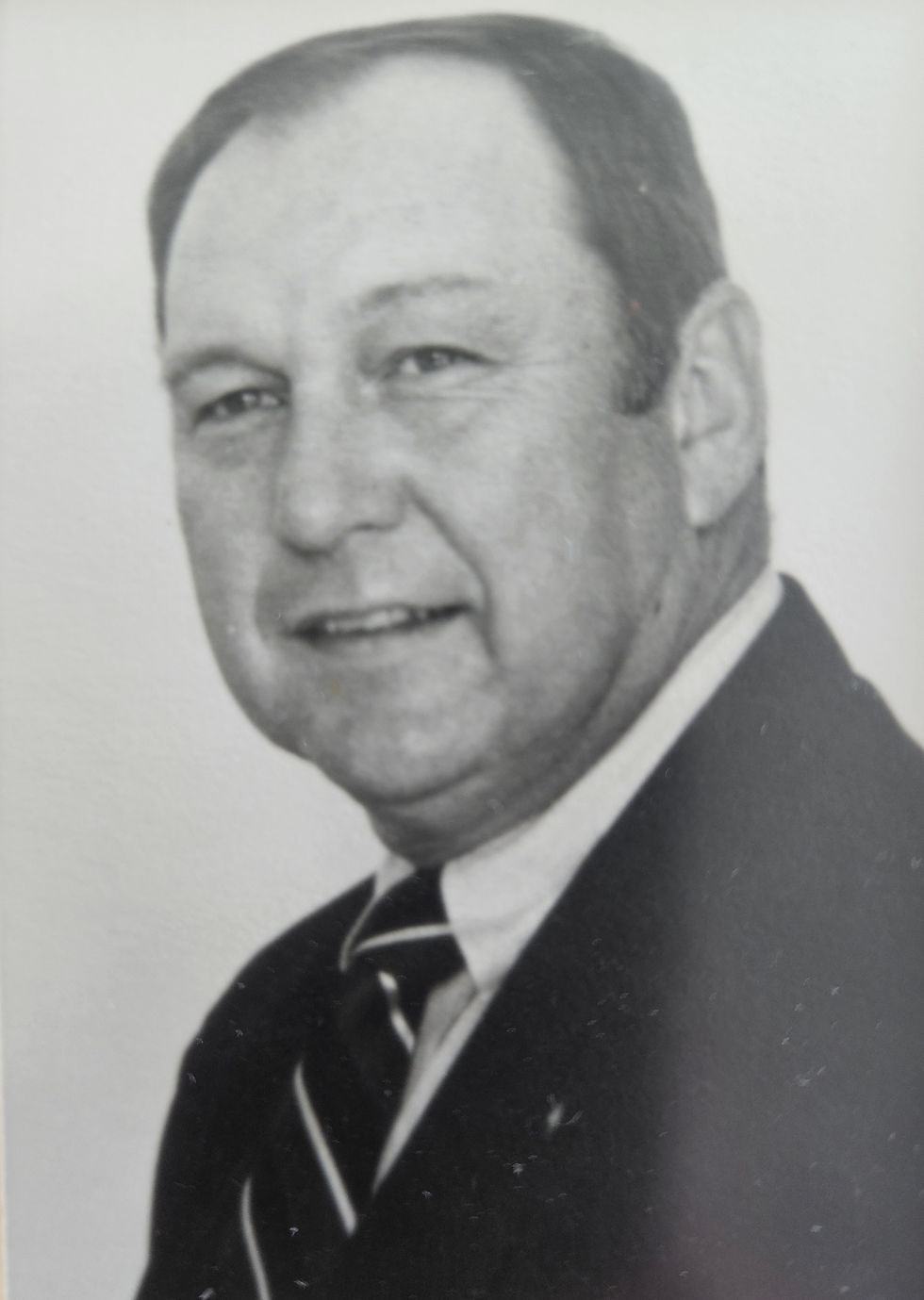
John Hudson (Acting)
1976 ‑ 1977

Mr. Jules Cote
1977 ‑ 1979

Mr. Dean North (Acting)
1979
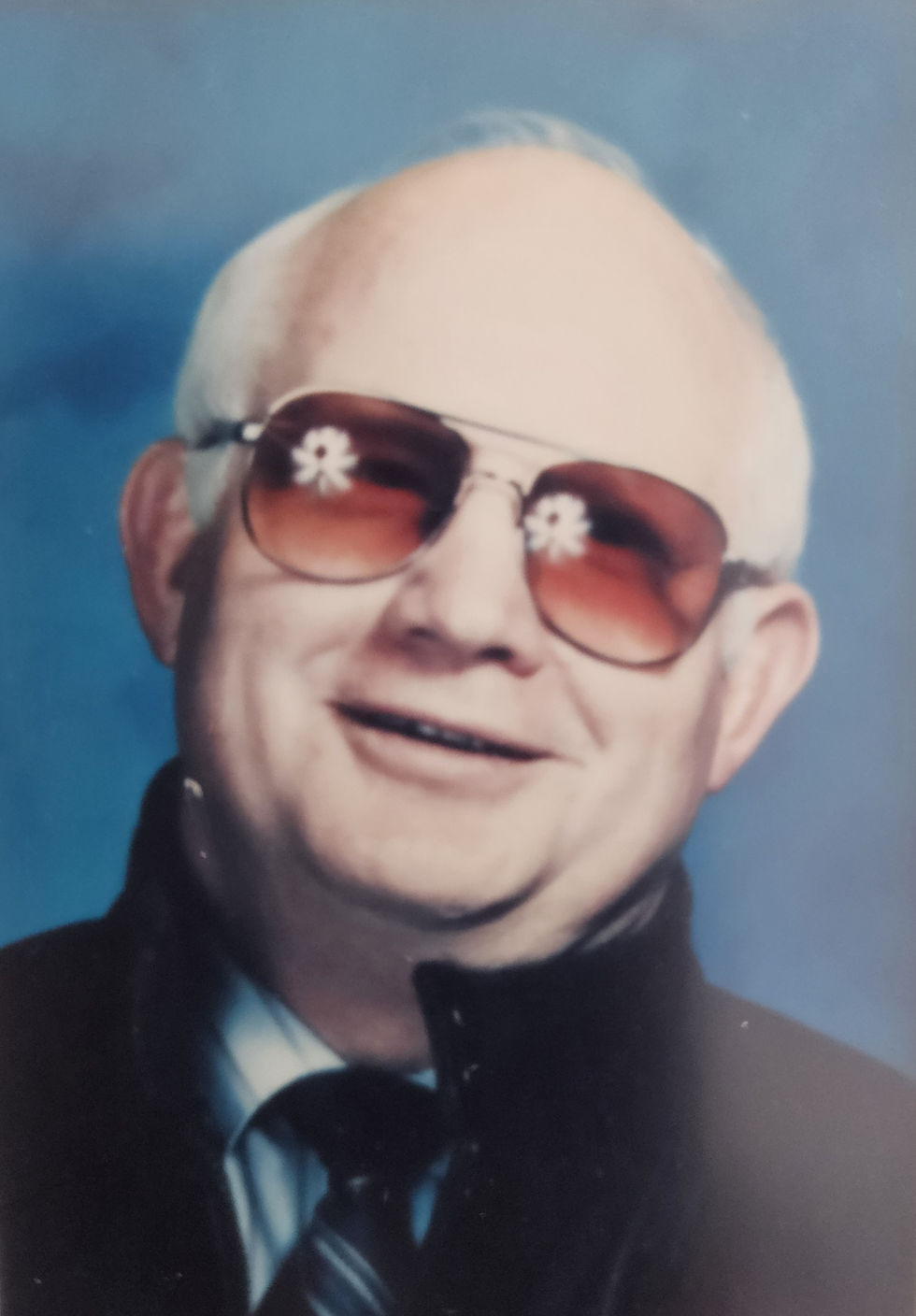
Mr. Charles Boyer
1979 ‑ 1986

Dr. Marjorie A. Kaiser
1986 ‑ 2020

Mr. Dan Trefz
2020 - 2023

Dr. Jessica Vogel
2023 - present